
As another Olympic and Paralympic cycle draws to a close, Paris packs up its venues and life returns to normal, I thought it a good moment to resurrect this blog and reflect on a busy summer which I will remember for a long time.
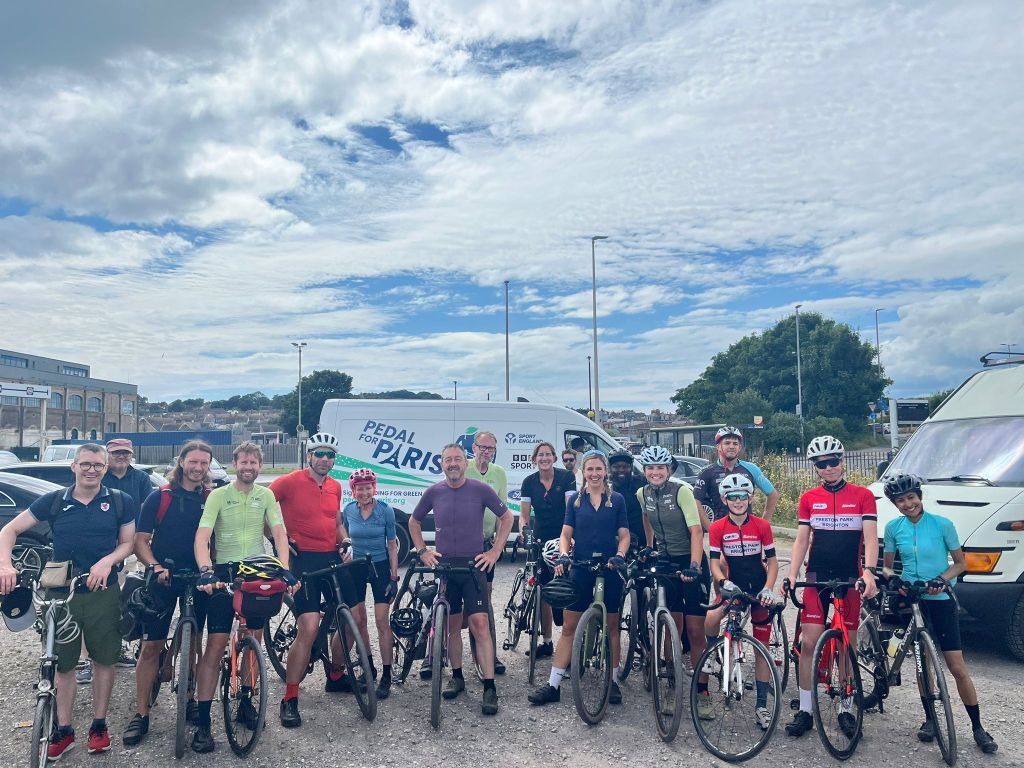
I can’t quite recall the moment when BBC Sports News producer Sarah Dawkins asked me if I would be up for cycling to Paris, but I must have been feeling energetic, as apparently I agreed to it straight away. I suppose with the next two Olympic Games being in Los Angeles and then Brisbane, the opportunity to do something like this was closing, and my ageing legs would almost certainly disagree in 12 years time when the Olympics perhaps will return to Europe.
The plan quickly evolved from just the two of us riding from Manchester, stopping at various sporting hubs to preview the forthcoming competitions for BBC Sport. Sport England, who are responsible for developing grassroots sport across the country, were planning a similar adventure and soon, thanks to BBC Sport sustainability lead Dave Lockwood amongst others, we were joined up in our plans. The main difference now was that Sport England chair, Chris Boardman, was joining the ride. He happens to be a former Tour de France cyclist, who also has an Olympic gold medal to his name and has even founded his own bike brand. Things had escalated somewhat!
The story of the ride, the athletes we met to preview the games, and the sustainability targets met by Sport England were all covered on the journey and in the documentary Pedal For Paris – now on BBC iPlayer. The more “behind the scenes” part of it I will cover here.
“How was it?” is the main question I have been asked since returning and “fast!” is the answer I’m going with. For some reason, I hadn’t quite grasped the concept of “average speed” versus “moving average” when cycling. One is, of course, your average speed across the whole day, which includes stops. That can be anything from adjusting a saddle or using the loo, to having a puncture or, I don’t know, needing to film a live broadcast for the BBC One o’clock news.
The whole ride had been meticulously planned by a team from London Marathon Events, led by head guide Graeme. Chris Boardman had a schedule of visits to organisations willing to make sustainability pledges, and that included meetings, photo shoots, interviews and so on. We, the BBC, had a schedule too. Live broadcasts for the evening sports bulletins as well as interviews with Olympic and Paralympic athletes before they headed to Paris. Deadlines were in place and hence the average speed targets needed to be met.
It is at this point I will turn to the subject of e-bikes. Now, I had ridden a bike before this trip, but I can, in no way, be described as a cyclist. I used to mountain bike -downhill, a bit – and now occasionally cycle to work or to the local pub. My longest ever ride before this summer according to fitness tracking app Strava was 26 miles at an average speed of 9.5 miles per hour. The target for most days of this trip would be around 70 miles at an average of 13 miles per hour. On top of this, I would need to carry camera equipment capable of shooting b-roll, interviews and live broadcasts – approximately 10kg in a pannier on the back of the bike. The case for e-bikes was strong.
So, in stepped the very nice people at e-Bike Escapes , based in the Midlands, who rented us some Ribble Gravel e-bikes. I had never ridden one before, but they were easy to use. Press a button, the e-assistance motor kicks in on the back wheel and 40Nm of torque assistance is provided. What does that mean? Well to put it into context, an elite cyclist who is hammering it will achieve 1.5Nm of torque per kilogram. Me, bike and equipment weighs around 100kg so that would mean me producing 150Nm of torque through my legs. 40Nm therefore is not an insignificant amount of assistance!
“Oh, it must just be like riding a motorbike to Paris then?” Well, unfortunately there was a catch. By law, e-bikes are limited to travelling at 15.5 miles per hour, and as soon as the bike exceeds that limit, there is no assistance. So, you’re on your own with a very heavy bike. And you’ll be unsurprised to hear that the former Tour de France cyclist leading the way likes to travel slightly faster than 15.5 mph, even uphill. This was going to be a workout.

We set off on a damp July 16th from the National Cycling Centre in Manchester after a morning of live BBC News broadcasts with Team GB BMX riders. My brief was clear, as well as filming Olympic preview segments at every stop, we were recording the whole journey for the “Pedal for Paris” documentary, and also providing video of the ride for various news outlets every day and BBC Sport online. In order to capture all of that on the move, I had elected to bring along a few cameras. Geek alert for the next paragraph.
That camera line up in full… An insta360 camera, mainly mounted on the front of my bike on an extendable pole, with a quick release plate allowing me to remove it when the trails got too bumpy; two GoPro cameras – one mounted on the rear pannier shelf of my bike, allowing me to film riders behind me, monitored using an iPhone mounted on my handlebars – the other swapping between other riders bikes depending on what was going on each day; An iPhone 15 pro max with sound kit in my small backpack which I could use to gather interviews, ‘fly past’ shots of the riders and also had live broadcast capability via the LU Smart app; and finally, in what became known as the “Magic Bag”, a Sony A7siii with LiveU 300 unit and an ultralight Manfrotto BeFree tripod to use whenever we stopped to broadcast lives. For sound I would be using the DJI mic kit which I could clip onto riders so they could be interviewed on the move whilst behind my bike – filmed on the rear GoPro and synced in post production.
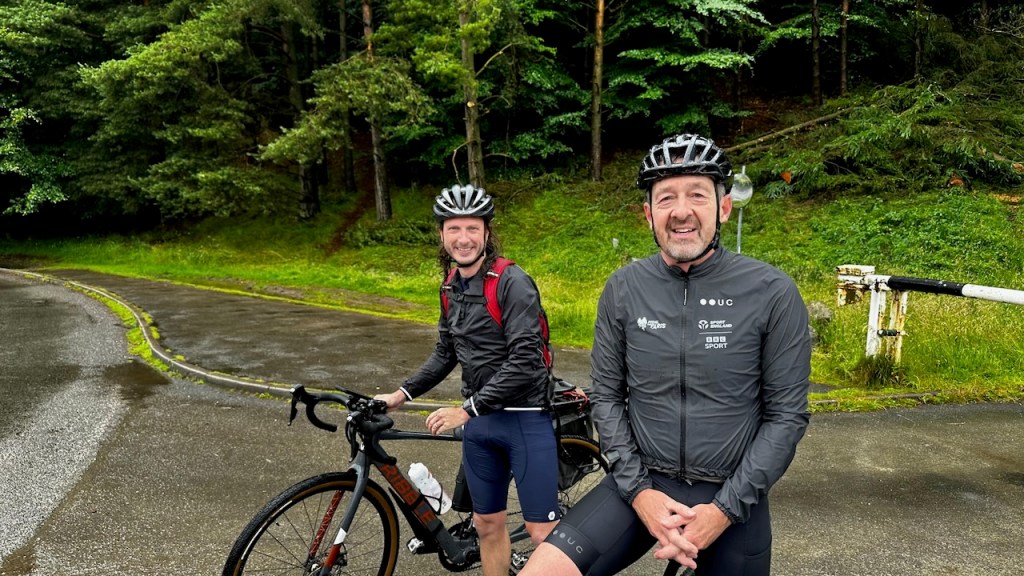
The other consideration on that first day, ascending into the Peak District out of Manchester, was the rain. It absolutely lashed it down for a couple of hours, and the waterproofing plans for the equipment were put to the test immediately. Thankfully, all the action cameras are waterproof, but the other equipment was stashed in a dry pannier bag, inside another plastic cover. The bag on my back didn’t fair too well and so everything in there was saturated by the time we got to the top of the hills. That was the least of our worries by then though.
I mentioned earlier about average times and keeping to a schedule. Well, thanks to a slow start and some mechanical problems in the group early in the day, that schedule was drifting and Chris needed to make his appointments along the way (the first was a really great project planting moss to help replenish the peat stocks in the Peak District). So, the pace increased and the e-assistance became invaluable. I had the strange experience of actually looking forward to the steep hills because the leaders dropped below 15mph and I was able to catch them! Madness. There was a point where I had arranged for a BBC News colleague to film some footage from the summit of a climb, and to his surprise, he saw me leading the way as we hit the top. All thanks to the e-bike of course.

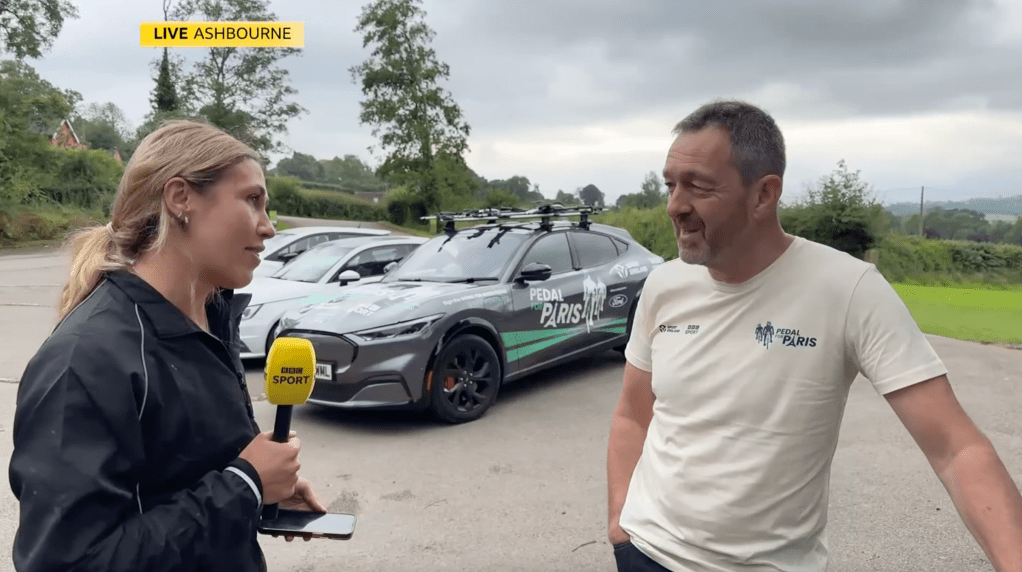
The day ended with a mad dash to the finish so that we could broadcast live into BBC Sportsday at 6.30pm. All the way down the final stretch of the ride into Ashbourne, the arrival time on the GPS read 6.12pm so we had to keep the pace. The plan had been to retrieve the “Magic Bag” from the electric support vehicle at the end of the day so that I could use the larger camera and live unit. However, the support van had unfortunately run out of juice during the day and couldn’t get to us in time, so my plan B had to suffice. Out came the iPhone 15 with LU Smart app for the live hit, and the results were actually great.
And so began the routine of cycling and filming, with every evening spent compiling, organising and editing the footage, then uploading it to a Dropbox folder so that it could be accessed by teams in London and Salford. Every day had it’s challenges – on top of the 70 odd miles of cycling.
On the day between Loughborough and Milton Keynes, I not only had a brake failure on the front but two simultaneous punctures which meant I had to walk a mile of the route.
The day from Milton Keynes to Bisham Abbey saw 40 degree heat which I had not had to endure on a bike before. When you are riding, you actually feel cool because the wind is rushing by as you desperately pedal to keep up with the pros. But when you stop, you realise you are overheating and losing fluid and salt at a rapid pace. Thankfully the team had a good supply of isotonic drinks on hand.
And every night the e-bikes needed to come into our hotel rooms to charge, which was entertaining on more than one occasion, particularly in the Premier Inn in Marlow where we were staying on the hottest day of the year, which had no lift and our rooms were located at the top of four flights of stairs in an old cottage style building.


There were also some great moments of course. Riding into Loughborough University for a lap of honour around the athletics track; spending a mad couple of hours following a tandem ridden by former England rugby stars Mike Tindall and James Haskell; or spending the day powering through the South Downs in a small group compiled of guide Graeme, Chris, Dame Sarah Storey – Great Britain’s most decorated Paralympian – and Mark Beaumont who holds the World record for cycling around the entire world. It was days like this when I started to see the attraction of cycling as a hobby – maybe enough to turn me into a MAMIL (Middle-Aged-Man-In-Lycra)? We shall see.


After six days and around 400 miles, we were at Newhaven Ferry Terminal waving England off and looking forward to the first part of the journey where we would be moving but not having to pedal. Those of you familiar with travelling abroad for work with technical equipment post-Brexit will relate to the pain of having to wait for French customs to stamp my import/export documents. It really was the last thing I wanted to endure when the ferry arrived in Dieppe at 1am, but at least we were in France.

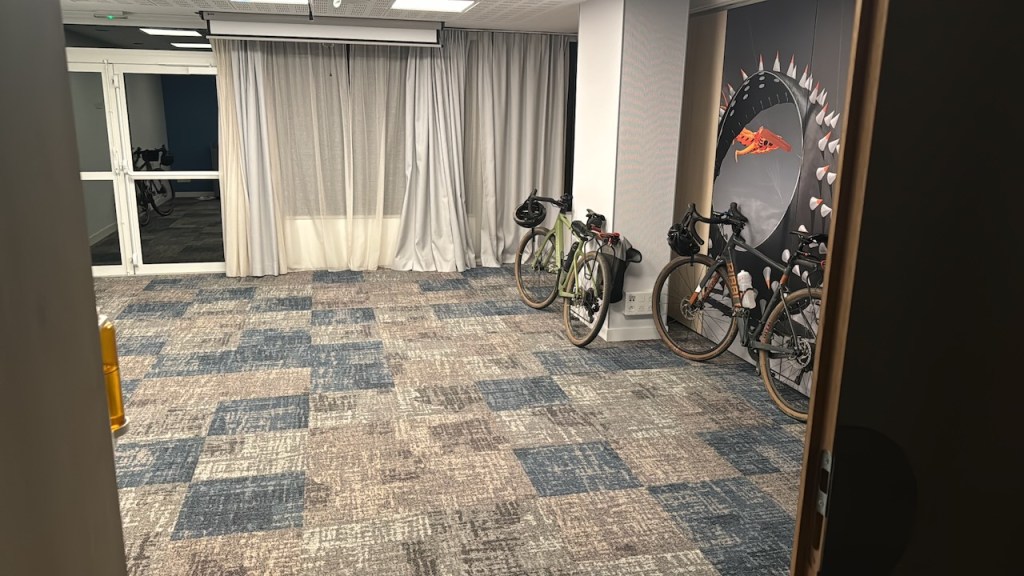
The difference in facilities for cycling were immediate. The cycle paths are one thing but suddenly we didn’t have to store bikes in our rooms. The hotel had a dedicated room – with POWER! Luxury.
The next two days were great fun but hard work. Flying up the ‘Avenue Verte’ through the French countryside. It’s a superb cycle path which stops only at the odd gate to cross village roads. The team were averaging well over 20mph, and I had been shown some of the dark arts of peleton riding by Chris and Graeme. I hadn’t realised how important it is to stay around 30cm from the back wheel of the bike in front. As soon as you try it, especially with a slight headwind, you see the amount of energy it can save – up to 60%, according to Graeme. You feel like you are being dragged along by the lead riders and it allows you to keep up.
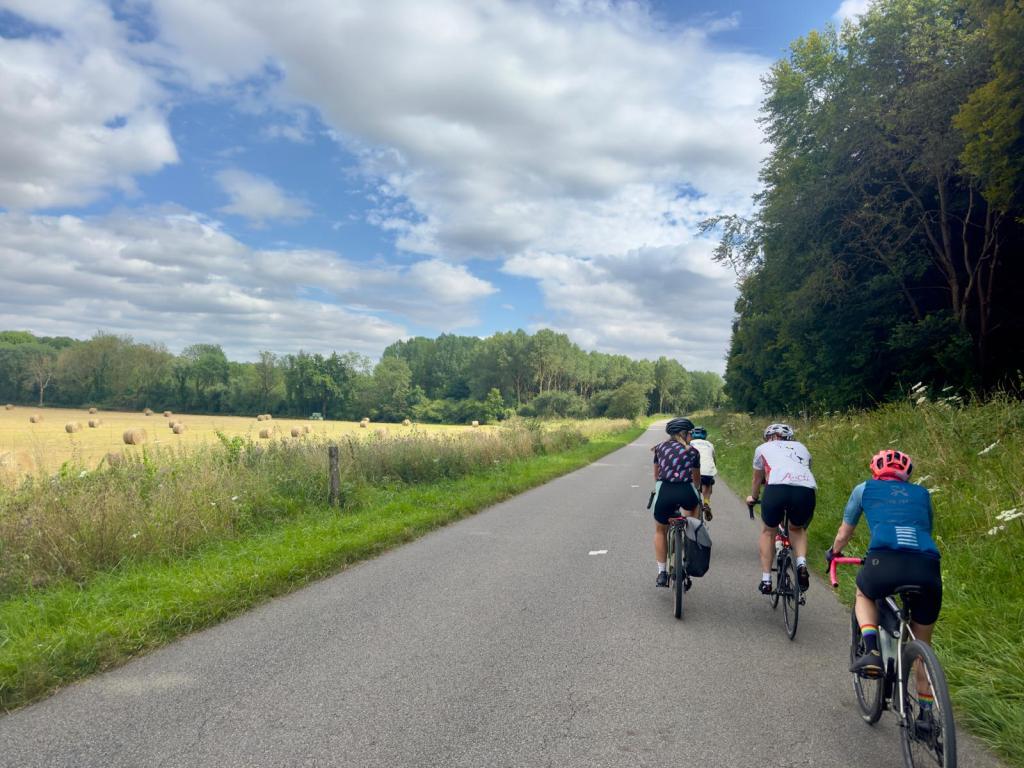
Somewhere south of Dieppe, I found out how hard it can be if you don’t have that slipstream assistance. I had stopped to film a shot of the group passing by, and managed to get around 20 seconds behind the peleton. I then tried as hard as I could to catch up. Five miles later I was still behind, and I was losing the battle to stay in touch. To the rescue was Graeme again. He spotted me, dropped back and then literally pushed me up the road until we caught up. Absolute beast!
The next day we rode to the Team GB prep camp just north of Paris and had the pleasure of meeting some of the athletics team who were there to get ready in the final days before the games. It was at that point we realised the Olympics were just days away and the excitement started to build. Added to that was meeting British sprinting legend Linford Christie who is now part of the coaching set up for Team GB. We were now ready for the final stretch to Paris.

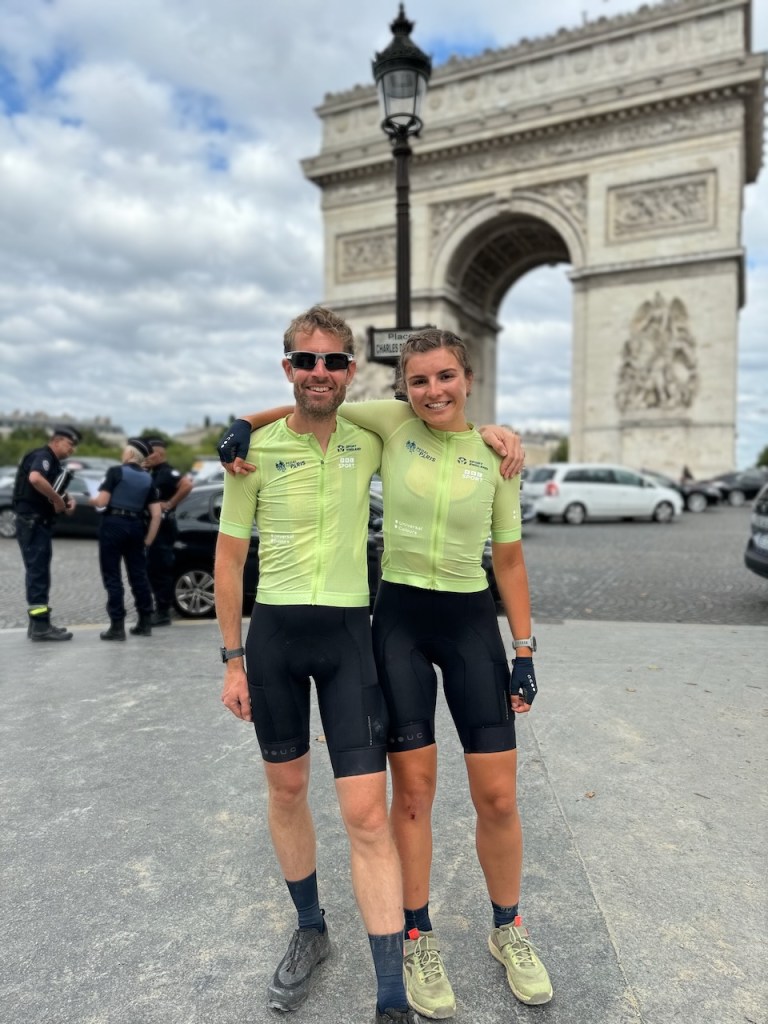
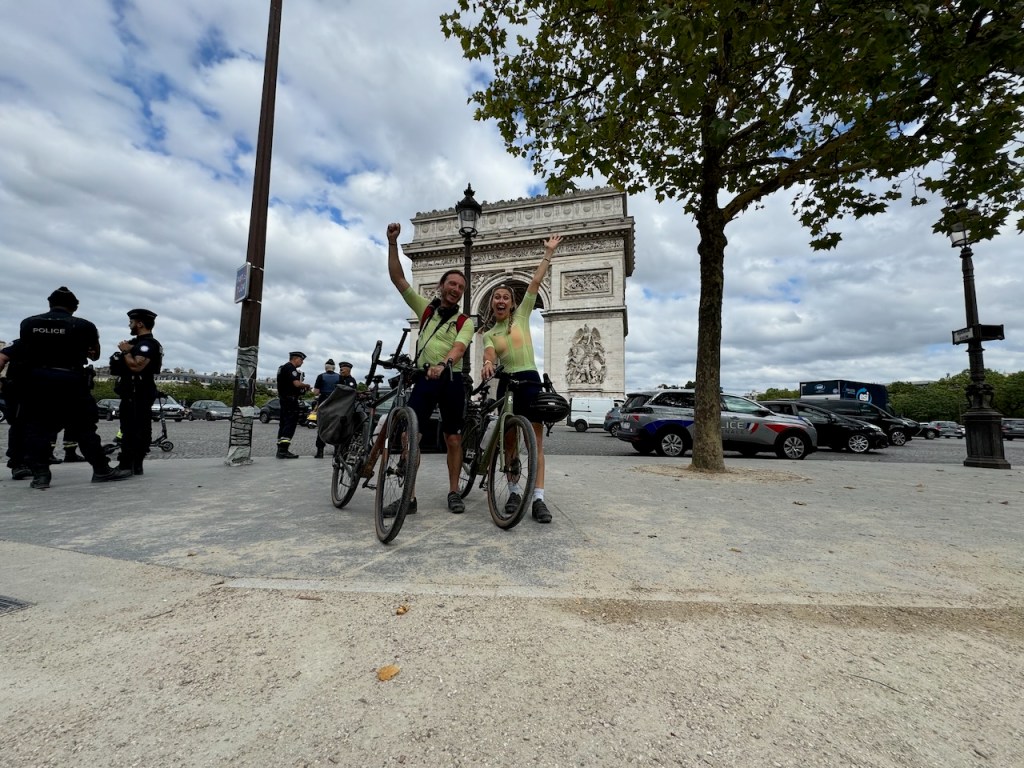
A couple of hours later we were cruising up the Champs Elysees, Chris had donned a yellow jersey and there was a welcoming party of friends, colleagues and photographers waiting at the Arc de Triomphe to greet us. It was a great feeling to swing around the roundabout on our bikes, safe in the knowledge that we wouldn’t have to pedal 70 miles again the next day.
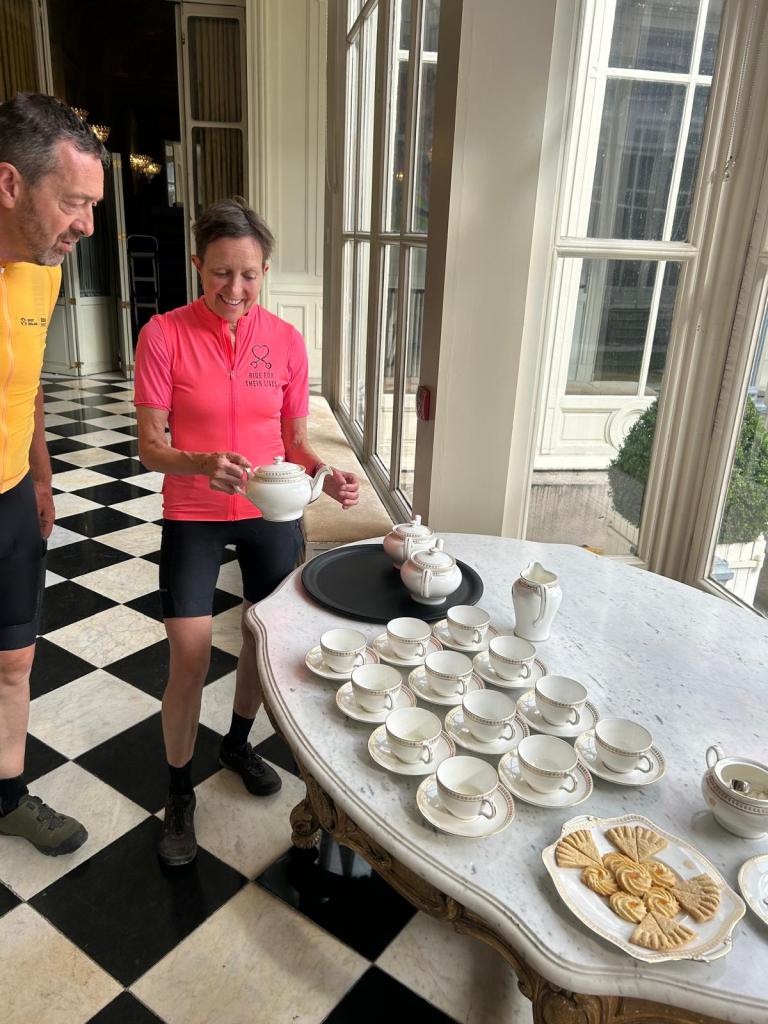
Also joining us for the final part of the ride that afternoon was Mark, the husband of Dame Menna Rawlings who is the British Ambassador to France, based in Paris. We had finished the ride and the filming and just needed somewhere to edit our final piece for BBC Sport and Mark kindly offered for us to ‘come over to his place’.
Of course, his place happened to be the British Embassy just off the Champs Elysees. On we went, with our bikes, bags and cameras and before you know it we were being shown pictures of Queens of England on the walls in the hallway. One of the most surreal experiences of my career was being shown around the building, looking for somewhere to edit. “Will the vestiaire be OK?” I was asked. “Yes, I’m sure the vestiaire will be perfect!”. I’ve since found out that vestiaire is in fact just a posh word for a cloakroom. It was quite the cloakroom though, I can assure you.

The last stretch was to head over the Seine to the hotel, home for the next three weeks to cover the Olympics which started in just three days’ time. The only problem now was that the BBC wanted our program documenting the ride to run that coming weekend to coincide with the lighting of the flame. What better way to relax after cycling more than 550 miles than to edit a half hour documentary! At least we didn’t have to pedal any more.
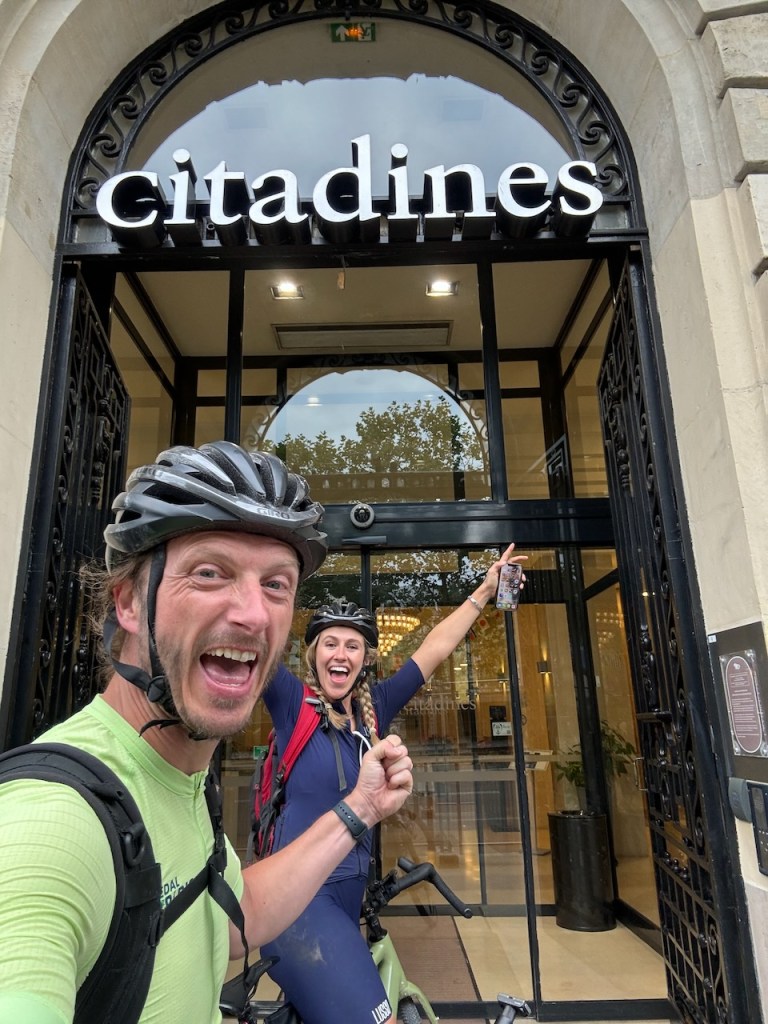
Pedal for Paris is available to watch now on BBC iPlayer.
BeBroadcast Youtube channel with some of our content from the ride


 Vacuuming all traces of seeds and debris from my camera equipment. Part of biosecurity measures taken by the expedition team.
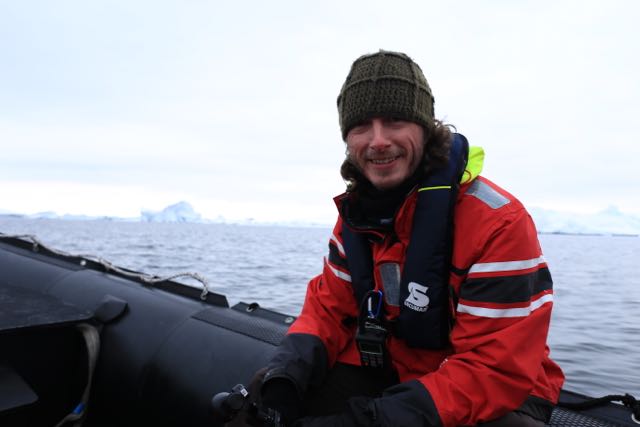 Aboard a zodiac heading shore
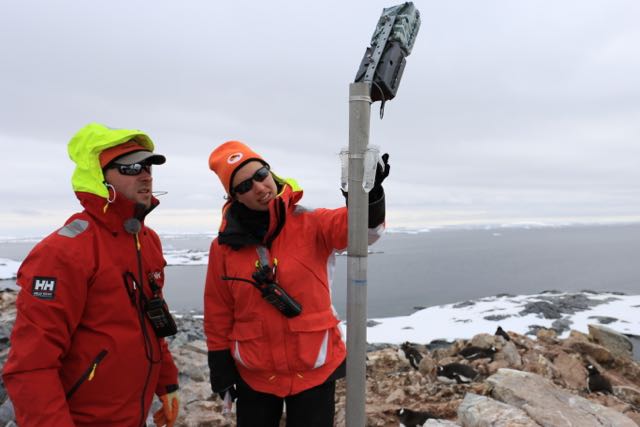 Dr Tom Hart and Hila Levy at a penguin monitoring camera
 Filming a penguin colony in the gloriously sunny Neko Harbour
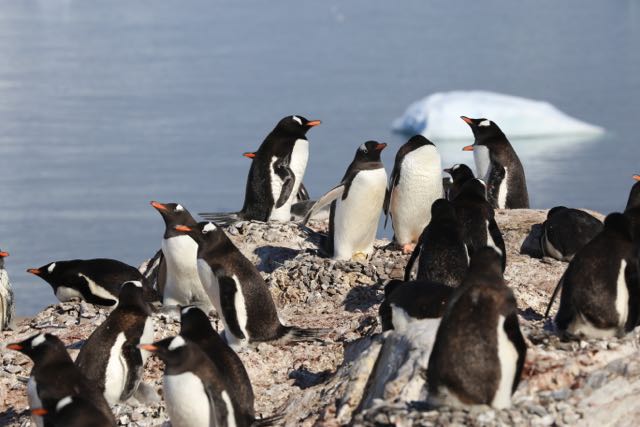 Gentoo penguin colony at Neko Harbour
 Landing at Leith Cove to set up a time-lapse
 Cracking ice sheet at the head of a glacier. The ship is not even half as high as this cliff
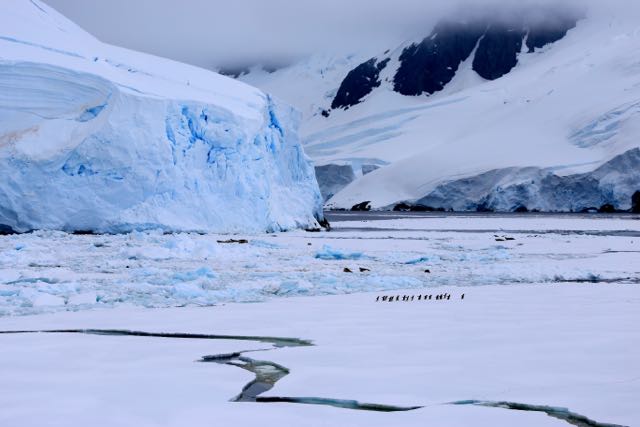 Penguins fleeing from a large crack formed in the ice by the Ocean Endeavour
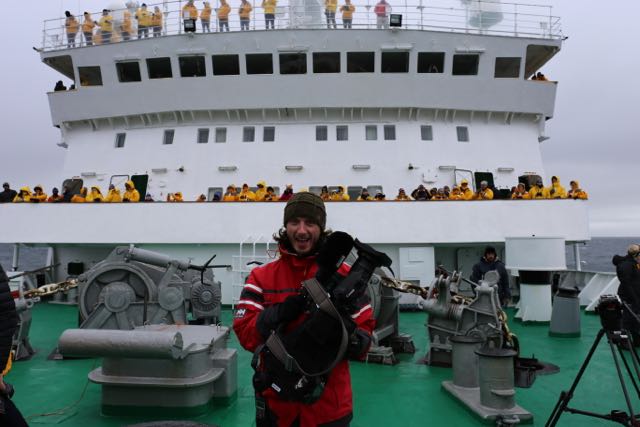 Who’s got the best camera? Me obvs
 Antarctic sunset last AAAAGEESS!
 Vic’s outfit for the trip. Nice purple hat
 Vernadsky research base on the Antarctic peninsula
 Me, Vic and Sascha with a piece of 80’s history. The machine that led to the discovery of the hole in the ozone layer.
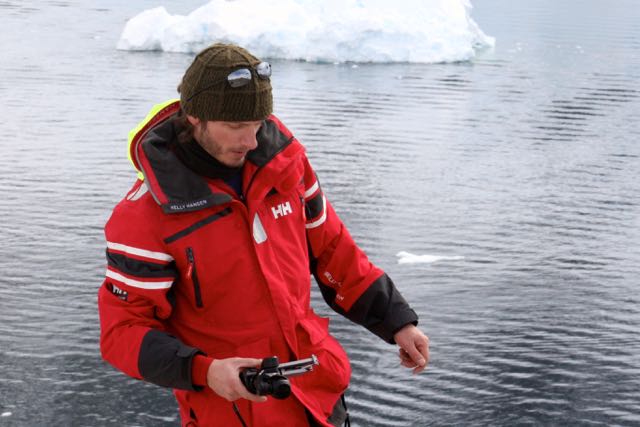 Filming with the DJI Osmo – perfect from a moving boat… but not very waterproof!
 The best edit suite in the world?
 Sending video via BGAN – Let’s hope we don’t hear the ‘abandon ship’ alarm in the next ten minutes
 Tom Daley eat your heart out
 Vic uses my high tech VO booth in the cabin
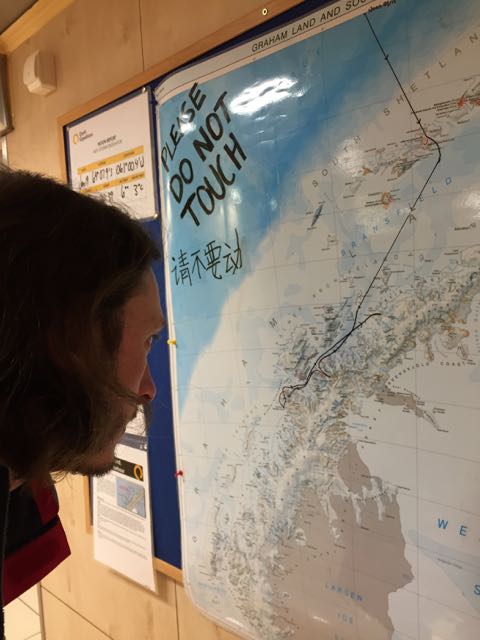 Examining our journey through the Peninsula
 Photos by Vic Gill (@Vic_Gill on twitter), Dr Tom Hart, Hila Levy, myself and a random tourist (thank you!)



































 DAVE CHEESEMAN